The Current Challenges in Healthcare Diagnostics
In the medical field, healthcare diagnostics serves as a cornerstone for effective patient care. Yet numerous challenges impede this vital process. One of the prominent issues is the overwhelming volume of data that healthcare professionals must navigate. With advancements in medical technology, the amount of information generated from tests, scans, and patient histories has skyrocketed. As a result, clinicians often face time constraints, struggling to analyze substantial data in conjunction with demanding patient loads. This hurried process can lead to critical oversights that may jeopardize patient health.
Human errors represent another significant challenge within the diagnostic realm. Manual reviews of patient data can introduce inaccuracies that affect clinical decision-making. For instance, missed anomalies in radiological images or misinterpretations of laboratory results can result in incorrect or delayed diagnoses. These inaccuracies can lead to inappropriate treatment plans, ultimately harming patient outcomes and eroding trust in healthcare systems.
Moreover, the complexity of certain medical conditions poses additional hurdles in diagnostics. Conditions such as autoimmune disorders or rare diseases often present with ambiguous symptoms, making them difficult to diagnose accurately. Delays exacerbated by the necessity of multiple tests or referrals to specialists can further complicate a patient’s journey to receive appropriate care. Consequently, the time taken to reach an accurate diagnosis can lead to increased anxiety for patients. And a potential deterioration of their health status.
The compounding effects of these challenges illustrate the urgent need for innovative solutions within the diagnostic process. As healthcare providers aspire to enhance the quality of care and improve patient outcomes, it becomes increasingly imperative to explore advancements that can address these impediments effectively.
AI Tools: A Game-Changer in Healthcare Diagnostics
The emergence of artificial intelligence (AI) tools is profoundly impacting diagnostic workflows within the healthcare sector. These technologies are facilitating a variety of applications that not only enhance efficiency but also improve precision in diagnosing medical conditions. By integrating advanced algorithms and machine learning capabilities, healthcare professionals can significantly streamline the diagnostic process.
One prominent application of AI in diagnostics is medical imaging analysis. Leveraging deep learning techniques, AI systems can analyze medical images such as X-rays, MRIs, and CT scans with remarkable speed and accuracy. These tools assist radiologists by highlighting abnormalities that may be overlooked during a manual examination. Asa result, increasing diagnostic confidence and reducing the likelihood of human error. As a result, healthcare providers can make more informed decisions regarding patient treatment plans.
Another transformative application involves the use of natural language processing (NLP) to manage patient records. By employing NLP, AI tools can efficiently extract relevant information from unstructured data within electronic health records (EHRs). This capability allows for more comprehensive data analysis, aiding healthcare professionals in identifying trends and patterns that are essential for effective patient care. The automation of data extraction not only saves time but also enables healthcare providers to focus on direct patient interactions.
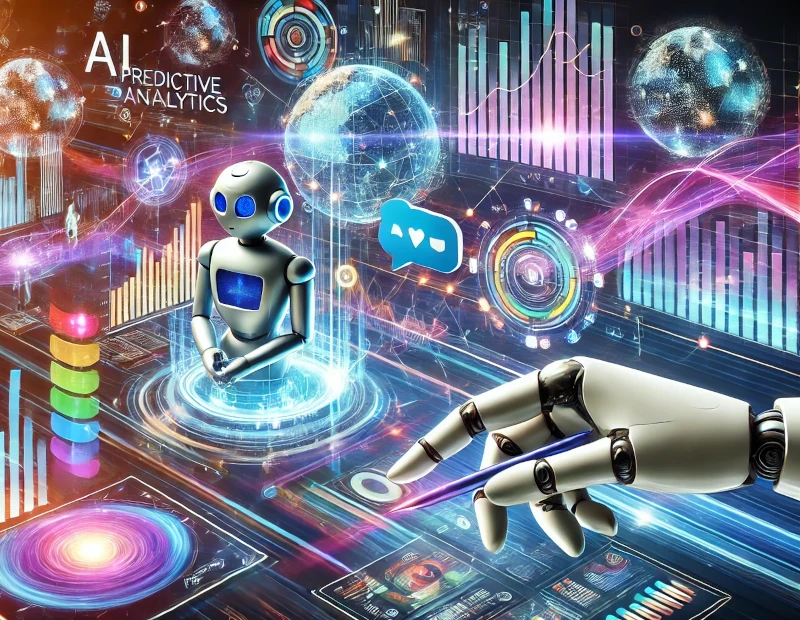
Predictive diagnostics is yet another area where AI tools demonstrate their value. By analyzing historical health data, these systems can predict potential health issues before they become critical. Such foresight empowers healthcare practitioners to implement preventive measures, ultimately enhancing patient outcomes. Additionally, virtual diagnostic assistants are emerging, providing real-time support to clinicians by offering insights and recommendations based on extensive medical databases.
Real-World Use Cases
- Early Sepsis Detection at the Mayo Clinic
The Mayo Clinic employs an AI-driven system that analyzes patient vitals and medical records to identify early signs of sepsis. By flagging potential cases sooner, clinicians can administer interventions more promptly, significantly reducing sepsis-related complications and mortality rates. - AI-Assisted Eye Disease Detection at Moorfields Eye Hospital
In collaboration with DeepMind, Moorfields Eye Hospital in London utilizes AI models to detect various ocular diseases. Incuding diseases such as diabetic retinopathy and age-related macular degeneration—from retinal scans with near-expert accuracy. This approach speeds up diagnosis and ensures that patients receive timely treatment, helping prevent severe vision loss.
As these AI tools continue to evolve, their integration into medical practices will play a pivotal role in reshaping healthcare diagnostics, paving the way for a more efficient and precise approach. The cumulative impact of these advancements signals a transformative shift in how diagnostics are conducted, aimed at improving the overall quality of care delivered to patients.
Enhancing Doctor-Patient Interactions
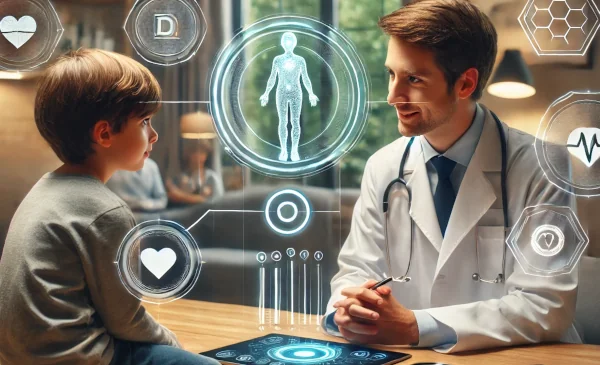
The integration of artificial intelligence (AI) in healthcare significantly influences the dynamics of doctor-patient relationships. By automating routine tasks and streamlining data analysis, AI technologies enable physicians to focus more on what truly matters—their interactions with patients. Instead of being bogged down by copious amounts of data, doctors can dedicate additional face time to their patients. This more personal touch fosters a more personal connection. This increased interaction time not only improves the quality of care but also builds trust between doctors and patients.
AI Serves as a Tool to Enhance the Human Elements of Medicine
Concerns regarding the dehumanization of medical practice often arise with the adoption of advanced technologies, such as AI. Critics argue that relying on algorithms and machines may diminish the human touch that is so vital in healthcare. However, it is crucial to understand that AI serves as a tool to enhance, rather than replace, the human elements of medicine. By efficiently processing information, AI reduces the cognitive load on healthcare providers. This allows them to engage in meaningful dialogues with patients. This deeper engagement leads to improved patient satisfaction and outcomes, as patients feel more heard and valued.
Furthermore, the reduction of administrative burdens through AI facilitates better decision-making. With an abundance of time saved, doctors can perform thorough evaluations and consider patients’ unique contexts during consultations. This not only enhances the diagnostic process but also cultivates a collaborative environment where patients feel empowered to participate in their healthcare decisions. The result is a more robust patient experience characterized by active communication and partnership between doctors and patients.
As the healthcare landscape continues to evolve with the advent of AI technologies, it is imperative to recognize their role in enhancing, rather than undermining, the vital doctor-patient relationship. The potential for improved interactions through the adoption of AI demonstrates a leap forward in providing effective and empathetic healthcare.
Overcoming Barriers to Adoption and Future Vision
The integration of artificial intelligence (AI) into healthcare diagnostics faces several significant barriers that must be addressed to fully realize its potential. One major challenge is the need for extensive training for healthcare professionals. Many doctors and practitioners may feel overwhelmed by new technologies, which can hinder their ability to effectively utilize AI-driven diagnostic tools. To overcome this, healthcare institutions must prioritize training programs that focus on enhancing the skills of medical staff, ensuring they are well-equipped to work alongside AI systems.
Furthermore, concerns surrounding data privacy often impede the adoption of AI in diagnostics. The protection of patient information is paramount, and any system that utilizes sensitive data must adhere to stringent regulatory requirements. Stakeholders in the healthcare sector must work collaboratively to develop robust data governance frameworks that guarantee patient confidentiality while enabling AI technologies to function effectively. Addressing these data privacy concerns can foster trust in AI applications, facilitating broader acceptance and integration of AI innovations in healthcare.
Interoperability Key Barrier Healthcare Diagnostics Adoption
Interoperability also presents a considerable barrier to the adoption of AI diagnostics. For AI systems to offer their full benefits, they must seamlessly integrate with existing healthcare infrastructure. This requires standardization of data formats and communication protocols across different platforms. By focusing on creating interoperable systems, healthcare organizations can enhance the efficiency of AI diagnostics, allowing for smoother transitions between various technologies and ensuring a comprehensive approach to patient care.
Looking to the future, the landscape of healthcare diagnostics promises exciting advancements driven by AI. Emerging technologies may lead to the development of AI-powered diagnostic devices capable of conducting real-time assessments and delivering instant results. Furthermore, personalized treatment strategies that leverage AI’s analytical capabilities can significantly improve patient outcomes, providing tailored healthcare solutions that meet individual needs. Overall, the vision for AI in diagnostics is one of empowerment—enhancing doctor efficiency and precision while fostering a more responsive, informed healthcare ecosystem.

Robert J. Villemure is a digital marketing, e-commerce, and web development expert with over 20 years of experience. As the founder of OptimizexAI, he helps businesses across healthcare, hospitality, higher education, and e-commerce harness AI to drive growth and innovation. Previously, he led large-scale SEO and digital initiatives at Barton Associates and Wynn Encore Boston Harbor, optimizing websites, boosting engagement, and managing multimillion-dollar digital campaigns. A graduate of the MIT Sloan + CSAIL AI program, Robert specializes in AI-driven marketing, predictive analytics, and technical SEO. Through OptimizexAI, he shares insights and strategies to make AI and digital transformation accessible for businesses of all sizes. Connect with him.